
Waarom hernieuwbare energieleningen 5-10 jaar lopen
Investor Education
Seven Years Is Not a Waiting Room: Why Good Project Financing Takes Time
A seven-year term makes many investors pause. It’s a long time to plan around, and it’s fair to ask why a loan needs that long. A well-structured project should have a clear answer, and the short one is this: the term of a project loan isn’t picked from a menu. It follows the way the project earns money.
Inhoudsopgave
In brief
- Solar parks and batteries earn money for many years, sometimes even 20 years or more. In cashflow-based project financing, loans are sized so they can be repaid from that income.
- With many project loans, you receive interest regularly and get your money back in steps, not only at the end.
- A longer term isn’t safer or riskier by itself. It changes the kind of risk, and your money is invested for longer.
The term follows the cash flow, not the calendar
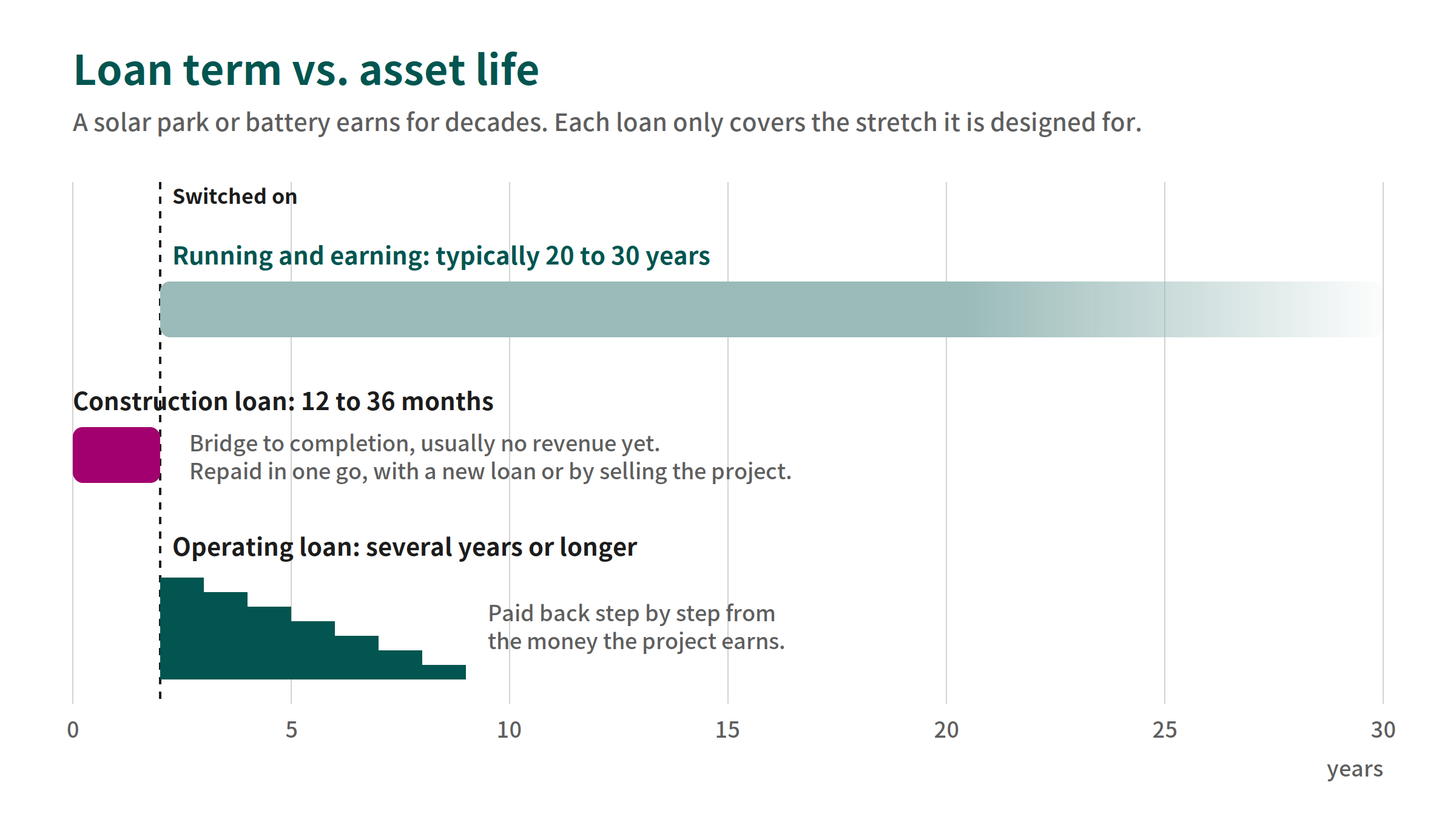
Solar parks and battery storage systems are built once and then earn income for many years. Lenders don’t size a loan around the asset’s technical lifetime alone. They look at when money comes in, how much comes in, and how reliably it arrives.
In other words, the loan runs as long as the project needs to repay it from what it earns, not as long as the solar panels last.
Two kinds of loans, two different jobs
A construction loan is a bridge. It finances the project until it’s finished. During this phase the project usually earns nothing yet. There is still a risk that building takes longer or costs more, or that permits or the grid connection are delayed. These loans typically run for 12 to 36 months. They are usually repaid in one go, either with a new long-term loan or by selling the finished project.
An operating loan works more like a mortgage paid from rent. The project is running and earns money regularly, for example by selling electricity. That money pays the running costs, the interest, and the agreed repayments. The loan is paid back bit by bit from what the project earns, rather than in one go.
In short: a construction loan pays for the building. An operating loan is paid back, bit by bit, from what the finished project earns.
Why the amount and the term belong together
Here is a simplified example. After paying its running costs, a project has €300,000 a year left over to pay its lenders. It borrows €1 million at an example interest rate of 6%. In the first year, that looks like this:
| 5-year loan | 7-year loan | |
|---|---|---|
| Repayment | €200,000 | about €143,000 |
| Interest | €60,000 | €60,000 |
| Money left as a safety cushion | €40,000 | about €97,000 |
With the longer term, the safety cushion for a weaker year is more than twice as big. So the longer term is not necessarily a sign of weakness. It may be the structure that makes the repayment plan realistic by aligning annual debt service with the project’s expected cash flow. It also means that investors remain exposed to the project for longer and may receive more interest in total over the life of the financing.
Put simply: the longer the term, the smaller each yearly repayment, and the easier it is for the project to keep up.
Seven years doesn’t mean seven years of waiting
Two features make a long term feel very different in practice: regular interest, often paid every quarter from early in the term, and repayment in steps, since many project loans pay back your invested money in instalments rather than as one lump sum at the end.
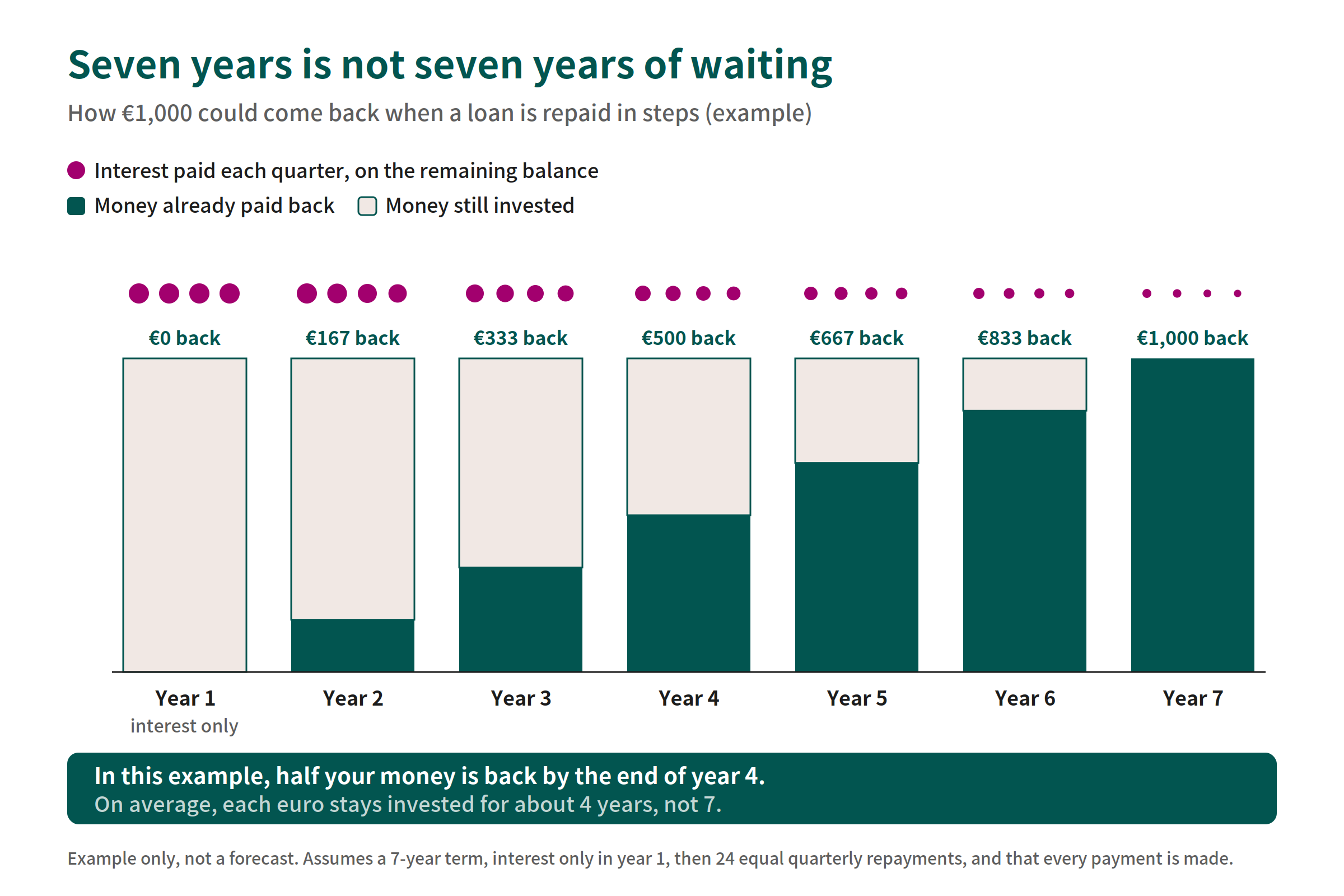
Imagine you invest €1,000 in a loan that runs for seven years. In the first year, you only receive interest. After that, part of your money comes back every quarter, in equal amounts. In this example, half the money is back by the end of year four. On average, each euro stays invested for about four years, not seven. Because interest is calculated on the amount still invested, the interest payments shrink as your money comes back.
This only holds if the project can make every payment as planned. Every offering has its own repayment schedule, set out in its Key Investment Information Sheet (KIIS).
Longer isn’t automatically safer, or riskier
A shorter term isn’t automatically safer, and a longer one isn’t automatically riskier. What changes is the kind of risk.
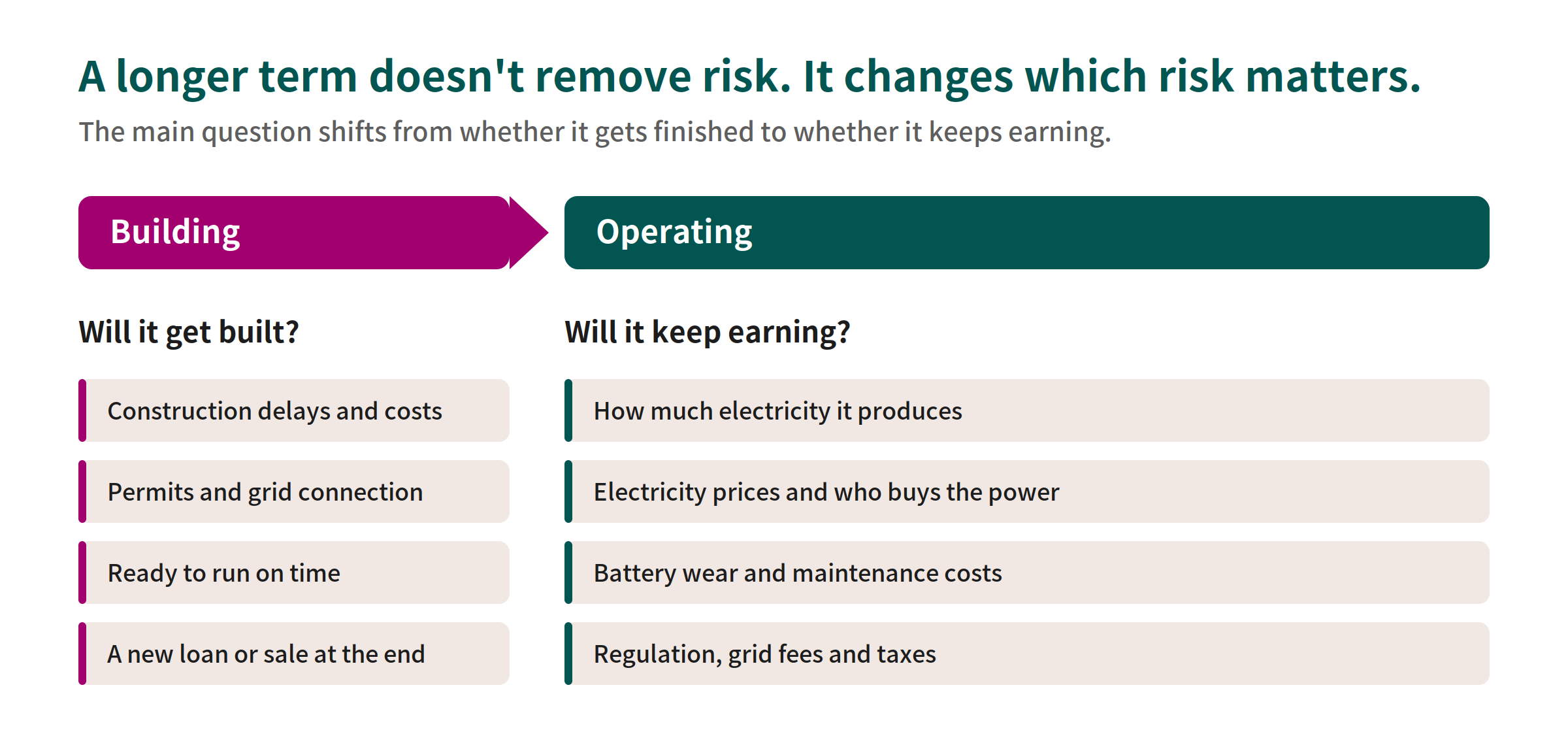
With a construction loan, the key question is whether the project will be finished and then paid off as planned. With a longer operating loan, the questions change. Will the solar park or battery keep working well? Will prices stay favourable? Will the technology perform as expected over the years?


Sluit u aan bij vele anderen, maak uw account aan!


100+
AANVERWANTE ARTIKELEN
COMETUM-interview: Een kijkje in pre-IPO-toegang tot Stripe, SpaceX en Anthropic
Interview met COMETUM Een kijkje achter de schermen: hoe COMETUM investeerders dichter bij giganten als Stripe, SpaceX en Anthropic brengt De meeste particuliere investeerders gaan ervan uit dat bedrijven als Stripe, SpaceX en Anthropic vóór…
Hoe directe digitale beleggingen de weg naar de beurs kunnen effenen
BIOGENA • Investeringsverhaal • Direct digitaal beleggen BIOGENA-investeringsverhaal Van familiebedrijf naar gezondheidsgroep. Wat voor BIOGENA begon als een familiegeleid micronutriëntenbedrijf, is vandaag een gezondheidsgroep met meer dan 120 miljoen euro omzet. Sinds 2015 wordt deze…
Vastgoed als investering: is dit het juiste moment om in te stappen?
De vastgoedmarkt is veranderd: financieringen zijn complexer geworden, kapitaal selectiever en projecten uitdagender in de uitvoering. Tegelijkertijd blijft de vraag naar nieuwbouw hoog – veel projecten stranden tegenwoordig niet op een gebrek aan vraag, maar…